




Prediction markets vs sportsbooks for Lakers games: who sets the price
A sportsbook builds its margin into both sides; a prediction market matches traders and charges a fee, or none. What that means for $100 on the Lakers.

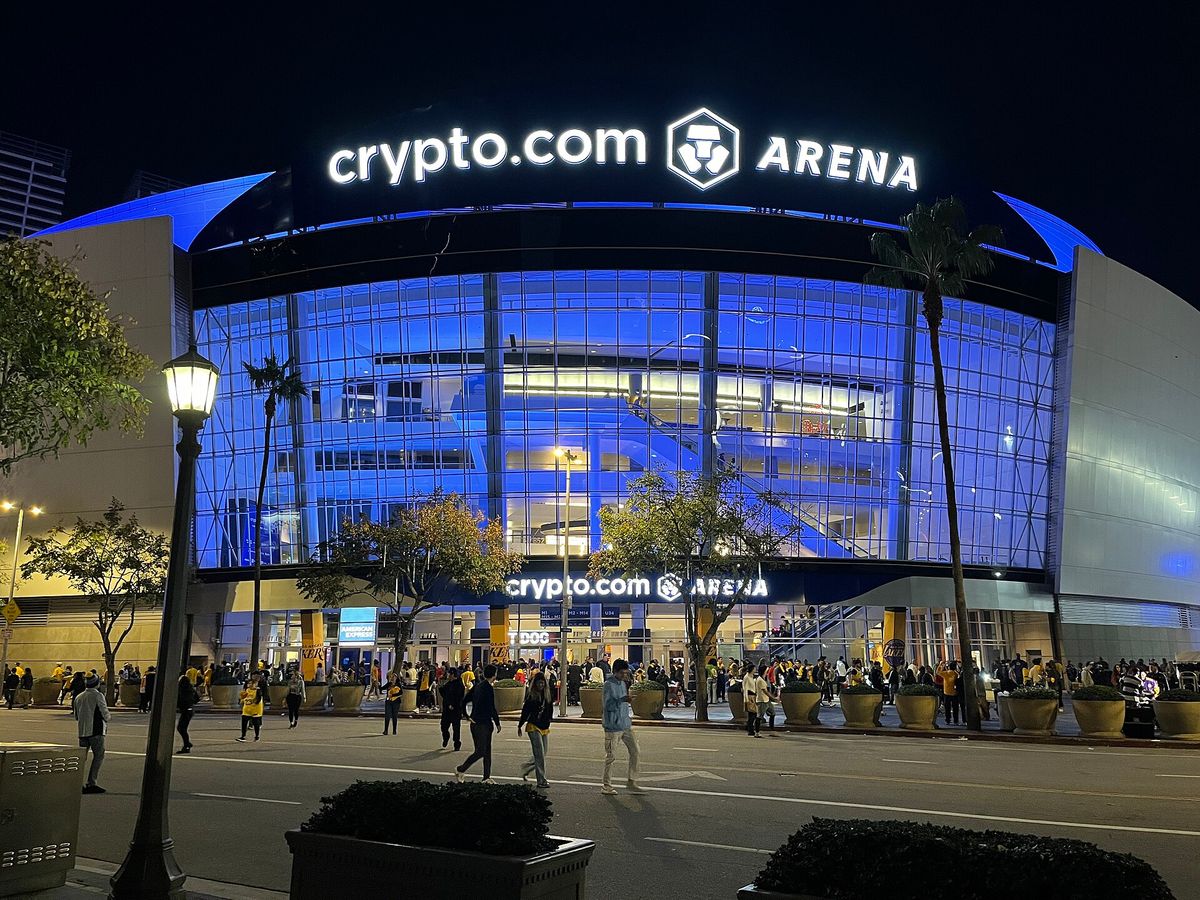
Two kinds of venue put a price on every Lakers game, and they arrive at it from opposite ends. The difference shows up in what a winning position pays. For a fan in California it also decides which one can be used at all: the state licenses no sportsbook, so the prediction markets are the only kind open to someone in Los Angeles.
How a sportsbook prices a game
A sportsbook is your counterparty. It sets the line, takes the other side of every ticket and protects itself by trimming both prices. A game it sees as an even contest does not go up at +100 each way; it goes up at -110 each way. Turn those into probabilities and they total about 104.8%. The extra is the book's margin, the vig or hold, and it is built in before tip-off.
It never shows up as a separate charge. It sits inside the odds. As ESPN listed it at about 4:30 p.m. Eastern on Friday, DraftKings had tonight's game at Lakers -154 and Trail Blazers +130. As probabilities, those add up to 104.1%, a hold of about 4.1%.
How a prediction market prices a game
A prediction market does not take your position. It matches it. Someone who thinks the Lakers win is paired with someone who thinks they lose, and the price is wherever their orders meet, quoted in cents as a probability. A Lakers contract at 60 cents pays $1 if the Lakers win. No house is protecting a position, so nobody has a reason to shade the line, and the two sides of a liquid market usually add up to within a cent or two of $1.
Each exchange charges in its own way:
- Novig charges no fee on pre-game straight trades. Live trades that take a resting order pay a taker fee that scales with price, and traders whose resting orders are filled pay nothing.
- Kalshi charges a taker fee scaled by price on a 7% rate. It is biggest on a coin flip and shrinks as one side becomes a heavy favorite.
- Polymarket US sets fees market by market; check its schedule before trading.
One game, three returns
Suppose the Lakers trade at 60 cents on an exchange, near the 60.6% that DraftKings' -154 implies.
| Venue | Quote | Profit on a winning $100 |
|---|---|---|
| Prediction market, no fee (Novig pre-game) | 60¢ (about -150) | $66.67 |
| Sportsbook (DraftKings, Friday afternoon) | -154 | $64.94 |
| Prediction market, 7% fee rate (Kalshi) | 60¢ | $62.13 |
At the same 60-cent price, the 7% fee rate takes $4.54 off a winning $100. The sportsbook collects its margin by moving the price rather than adding a charge. Only the fee-free trade pays the full value of the probability on the screen. The 60-cent exchange price is an illustration, not a quote; the board runs the same arithmetic on live prices for every Lakers game and sorts each side from best return to worst. How to read the Lakers board explains the formula.
Why this matters in California
California has no legal sports betting, so the DraftKings, FanDuel and other sportsbook rows on the board are reference prices for a fan in the state, not prices that fan can take. They are still useful: they show what the market thinks, and the hold column shows what each book charges.
Prediction markets are regulated federally by the CFTC rather than licensed state by state, and Novig, Kalshi and Polymarket US are available to Californians 21 and over. The one carve-out this fall is tribal land: a federal judge this week barred Kalshi's sports contracts on the reservations of the tribes suing it, following a Ninth Circuit ruling in September, though the order does not reach the rest of the state. California sports betting in 2026 has the full picture, and the California page prices this week's games at the venues a fan in the state can open.
Novig operates in 47 states. It is not available in Arizona, Michigan or Nevada, which matters this week for a fan who follows the team to Detroit on Sunday and to Phoenix on Nov. 15.
What "no fee" does not promise
No fee does not guarantee a better price. On a prediction market, other traders set the price and move it, and a thin market can show a wider gap between the best buy and the best sell than a sportsbook's built-in margin. When that happens it shows up on the board, because the hold column measures every venue's two sides the same way. How wide that gap is on a given Lakers game is something the board measures on every refresh rather than assumes.
This site is for readers 21 and older. If gambling stops being fun, call 1-800-GAMBLER.